
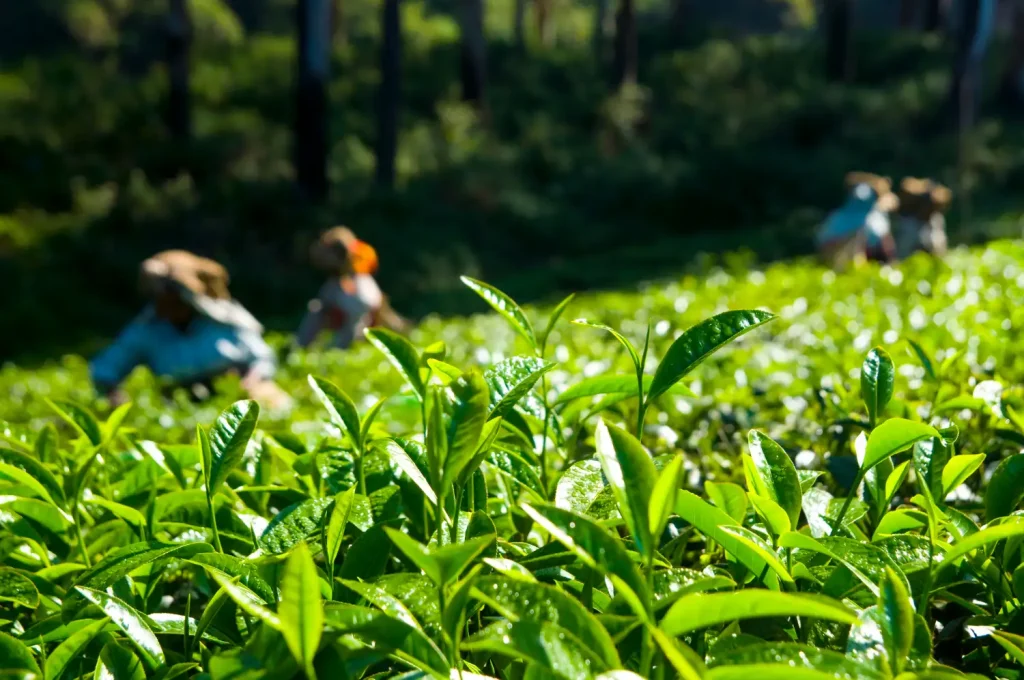
Like any other industry, the tea industry has its fair share of concerns and opportunities. More often than not the supply side of the tea value chain affecting smallholder farmers and their affiliated factories come to mind as they are quite distinct from what traders and service providers have to contend with.
One would want to ask what are these specific challenges and concerns at the farm level, processing level and at the trading level. What actually put the tea industry at crossroads? But why is this important?
Tea is a very important commodity to Kenya as the leading foreign exchange earner and the leading export commodity. The tea industry is a source of livelihood for more than 5 million people (1/10th of the population) directly and indirectly. With tea growing and manufacture being rural based activities, the tea industry is the leading contributor to rural infrastructural development and wellbeing for rural communities.
In an earlier Article, I had argued that my growing up in rural Kirinyaga gave me the opportunity very early to understand the benefits of a robust cash crop economy. Ending up making a career in the tea industry gave me the depth to understand how much things have changed. Tea farmers fortunes have been dwindling and one needs to delve yonder to smell what’s been cooking.
Available statistics reveal that productivity is either declining and/or stagnating; cost of production attributed largely to labor costs of tea plucking and fertilizer have also been skyrocketing; there has also been rapid increase in tea supply that has impacted on prices; the market has variously complained of declining quality of tea offered for sale; farmers suffer technical and economic limitations to engage in meaningful value addition at the farm level; and finally the payment methods are so unfavourable that they often put farmers in cash flow constraints. This is just at farm level.
At the processing stage farmers are faced with unsustainable production costs attributed mainly to rising labor wages and high cost of machinery, transport and energy as well as a multiplicity of taxes and levies; limited value addition arising mainly from the high cost of machinery and imported packing materials, taxes and high market entry barriers; inefficient marketing arrangements and inability to capitalize on opportunities offered by alternative marketing channels; poor harmonization and optimization of other auxiliary services; and a marked decline in quality.
The concerns at the trading level are in different forms and would require careful diagnostics given the influence of buyer preferences and changes in consumer tastes, as well as need for technological innovations in customer-centric product development, distribution networks, transportation/warehousing, merchandising and risk taking. It therefore ends up being a verdict on the institutions and leadership of those involved at this stage. It immediately follows that we must examine the institutional governance and coordination of policy formulation and implementation, especially in areas of the price discovery mechanism and the role played by each participant whether commercial participants or the regulator. Next one would question the predictability and stability of the destination markets given that we are literary a net exporter. Then, look at the domestic market which is influenced inter alia by taxes on value addition and domestic trading. It is therefore imperative to revisit the leadership of the institutions and companies involved visioning in navigating through these mazes, while also subjugating any potential and avoidable conflicts of interest. When I professionally joined the tea industry to start an enduring career some 25 years ago, I was inducted by Michael Gakungu in tea growing at Karirana, I then fell into the hands of Tom Muchura, Peter Kimanga and Nick Munyi, the gurus who taught me tea trade, and finally BM Kimani who taught me a great deal of smallholder production logistics at KTDA. I will forever remain indebted to these gentlemen. But one thing was common of these gentlemen, and which I learnt was common of all luminaries in the past, the passion for tea and its uniqueness. And it takes several years to get the depth with those passionate. With our laptop keyboard warriors beginning to take charge of key institutions and companies, as well as the new generations that cares less but living large at whatever cost, we are clearly at crossroads. I dare say, only technological advancements shall save us.